You have been applying conditioners, hair masks and doing everything right, yet your hair feels like straw. Most people aren’t aware of the fact that damaged hair doesn’t just need moisture. It requires protein to help rebuild what has been lost. Have you been wondering why your daily conditioner is no longer cutting it? It’s time to learn what a deep conditioner for damaged hair can do that your casual products cannot.
What Really Happens to Hair When It’s Damaged
The hair consists mostly of a fibrous protein known as Keratin. You can think of each strand as a rope made up of thousands of tiny fibres woven together.
When everything is fine with your hair, these fibres remain firmly bound. These protein bonds are, however, broken down by heat styling, chemical treatment, sun exposure and even rough brushing. The fibres begin to part, leaving openings and weak points in your hair.
The National Institute of Health explains that hair damage takes place when the cuticle is torn or lifted, leaving the inner structure exposed. When that occurs, your hair starts to lose moisture, breakage sets in and your hair looks duller, no matter how you style.
That’s where the actual problem begins.
Why Regular Conditioner Is Not Enough
You know why those regular conditioners don’t do justice enough to your hair? They just sit on the surface of the hair. They only provide temporary smoothness, moisture and softness to your hair but fail to repair the real damage. It is similar to placing a band-aid on a broken bone; it may seem better temporarily but the problem is still there. When you take a look at damaged hair, you can literally see holes in its structure where protein has deteriorated.
Moisture? Yes! Good! However, moisture alone can’t do the job. Protein is what you need to build the structure, both internally and externally. That is why you can spend a fortune on moisturising conditioners and still have hair that breaks, tangles and looks lifeless.
The Moisture-Protein Hair Balance You Need
On the other hand, excess protein without moisture can cause stiffness and make hair brittle. Balance is essential in maintaining hair health, particularly for damaged hair. There should be a balance. Balance plays a crucial role in keeping the hair healthy, especially when it is damaged.
Look at it fro this angle: moisture makes you have pliable hair and protein provides it with strength. Damaged hair is already depleted of its proteins, such that when moisture is added, it feels weak and mushy. Therefore, the first thing to do is to rebuild the lost protein structure, then seal the cuticle with moisture.
That is exactly what a good conditioning treatment for damaged hair is.
The Protein-Rich Deep Conditioner You Need
Deep conditioners are focused products that have smaller molecules that may penetrate your hair shaft rather than just coating the surface. The best deep conditioner for damaged hair contains protein molecules that are small enough to fit through those holes in the structure of your hair, basically patching up the damage.
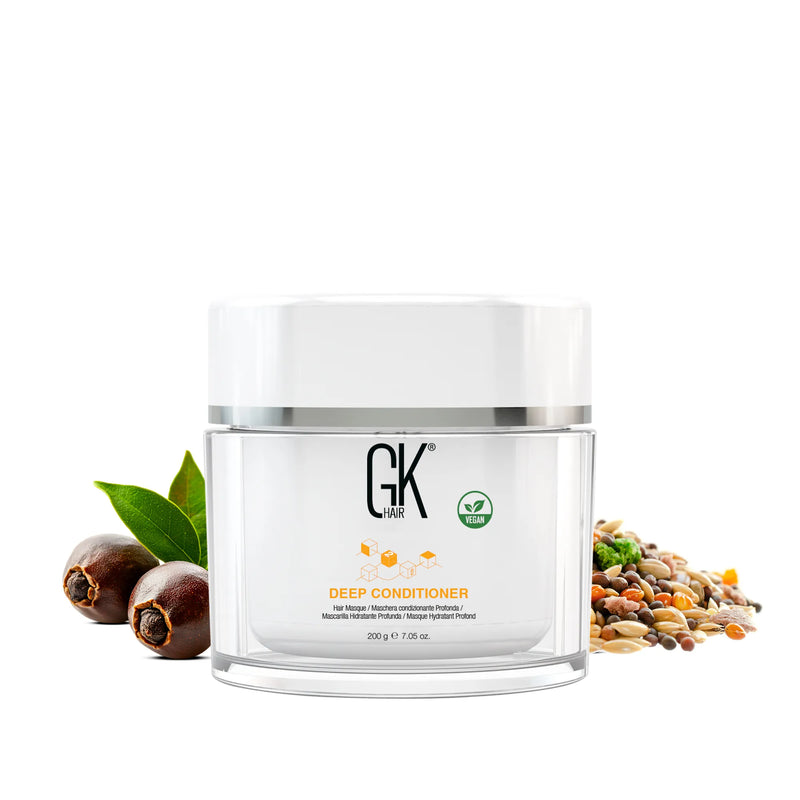
GK Hair’s Deep Conditioner stands out from other products in its category because it’s infused with Juvexin V2, a keratin anti-ageing protein blend that is specifically designed to repair broken bonds in damaged hair.

With Juvexin V2, GK Hair’s Deep Conditioner doesn’t just sit on the surface; it penetrates into the hair shaft, nourishes and absorbs moisture and protein to places where it’s needed the most in your hair. It is your best deep conditioner for hair breakage.
Want to know more about deep conditioners? Read more here: The Ultimate Guide to Deep Conditioner Hair Treatments for Soft, Healthy Hair
How to Use the Deep Conditioner
-
Wash your hair with a clarifying shampoo
-
Before applying the formula, make sure your hair is damp
-
Section and apply the formula to your hair. Then use a wide-tooth comb for even distribution.
-
Allow the formula to sit for 20 minutes, then rinse out with cool water.
Recognising Protein Deficiency in Your Hair
Even before damage sets in, your hair will show signs that it is lacking protein. Your strands feel sticky when wet, it starts to stretch excessively and even though it feels soft, it snaps easily. Protein is also required for hair that always tangles, fails to hold a curl, or hair that appears limp and lifeless. Hair that’s been over-processed with bleaching, colouring or chemical straightening, especially requires protein replenishment.
These treatments actually dissolve the protein bonds in your hair, and that is how they alter the structure of your hair. However, they can seriously damage your hair.
Building a Complete Repair Routine
Deep conditioning is essential, although it is more effective in a complete routine. Apply a light and hydrating shampoo such as GK Hair’s Moisturising Shampoo in-between treatments. It gently cleanses your hair without disrupting your protein structure.

Apply a small amount of GK Hair’s Argan Oil Serum from mid-lengths to the ends of your hair. It works as a sealant, boosting shine and strengthening hair from the inside out. Too much or uncontrolled heat styling may destroy the protein structure.
Making Deep Conditioning Part of Your Life
Deep conditioning should be a routine, just like how you brush your teeth. Take twenty minutes once a week, perhaps one evening when you are not in a hurry, and at sunset, to do this. The best deep conditioner for damaged hair not only repairs what’s broken, but also strengthens your hair, making it retain its natural moisture and shine.
There are instances that require intense protein care. The scorching Australian sun weakens protein in the hair during summer and in winter, it is split open by the dry air. Tame frizz and strengthen your hair with this kit that contains Juvexin-infused products to keep your hair smooth and manageable for months. GK Hair Best Keratin Professional Hair Kit consists of GK Hair’s pH+ Shampoo, The Best Keratin Hair Treatment, GK Hair’s Moisturizing Shampoo and Conditioner and GK Hair’s Deep Conditioner Hair.