Ever wondered why your hair feels waxy right after washing it? Product build up in hair is almost always the culprit. A small amount of shampoo residue, followed by a bit more from styling aids, and soon enough your hair loses its natural feel. It feels waxy.
Product build up in hair is residue from shampoo, conditioner, styling products and hard-water minerals that never fully rinses away. It leaves hair waxy, sticky or heavy and flat at the roots. One or two washes with a sulphate-free clarifying shampoo, massaged into the scalp and rinsed for at least 60 seconds, clears most of it.
What Is Product Build-Up in Hair?
What is product build up in hair, exactly? Build up is the residue left on the hair shaft and scalp from shampoo, conditioner, hair styling products, and minerals from the environment that were not rinsed away completely or that the scalp's natural oils have absorbed.
It isn't caused by dirty hair, you can wash your hair every day and still have build up. This is especially true if the shampoo you're using can't effectively lift the residue from prior products.
What Product Build-Up Looks Like and How It Feels
What does product build-up in hair look like? It depends on how advanced it is, but there are consistent signs worth checking for:
- Hair looks dull and flat in daylight, even straight after a wash.
- Hair loses volume at the roots a few hours after washing.
- Your shampoo doesn't lather on the first pass.
- Hair doesn't feel soft when dry; it feels sticky, coated and stiff.
- You run your fingernails down a strand of hair, and a faint white (or grey) film comes away.
- Hair strands tend to stick together instead of separating.
- Your hair feels heavier or greasier at the back of your head than at the front, because rinsing tends to be less thorough there.
Build-up doesn't distribute evenly across the head; it collects where water pressure is lowest during rinsing, which is usually the nape and the crown.
Why Your Hair Feels Waxy After Washing
Why does my hair feel waxy after washing is a slightly different problem to waxy hair in general. If you notice product build up right after washing your hair, then there's a chance your conditioner or styling product residue is still lingering in your hair, either from not emulsifying it properly beforehand or you didn't rinse well enough. Silicone-heavy conditioners are most likely the offender in this case. Instead of soaking in, they just coat the hair shaft, and regular rinsing usually won't get them off.
Product Build-Up vs Dandruff: How to Tell the Difference
If you treat the wrong one, you end up making both conditions worse. You can tell build-up flakes from dandruff by a few specific differences.
Product build-up in hair vs dandruff; what the flakes actually look like:
| Feature | Product Build-Up | Dandruff |
|---|---|---|
| Flake size | Larger, irregular | Smaller, rounder |
| Texture | Waxy, stick together | Dry, fall separately |
| Colour | White to grey, sometimes yellowish | White to off-white |
| How they come off | In sheets or clumps | Individually |
| Scalp feel | Heavy, coated; may itch mildly | Itchy, sometimes sore |
| Responds to clarifying? | Yes, usually within 1 to 2 washes | No, needs antifungal treatment |
Build-up can itch once residue and sebum have sat on the scalp for weeks, so judge by the clarifying test rather than by itch alone: if the flaking clears after one or two clarifying washes, it was build-up.
If the flaking doesn't stop after that and your scalp is sore or irritated, it points to a scalp condition, not a reaction to the product.
The 4 Different Types of Build-Up
Not all build-up is the same, and the fix depends on what you're actually dealing with.
1. Silicone Build-Up in Hair
Silicone build-up is likely the most common form, because silicones are found in such a large variety of conditioners and styling products. Silicone coats the shaft to help give hair smoothness and shine.
That's great in the short term, but silicones don't absorb, they build layer upon layer. After several washes, those layers build into a film that prevents moisture from penetrating your hair and leaves it feeling heavy and stiff. A sulphate-free clarifying shampoo will lift light silicone build-up; anything heavier may need a second clarifying wash.

2. Mineral Build-Up in Hair
Mineral build up in hair happens when mineral deposits from your water supply stick to your hair. Each time you shampoo, calcium and magnesium bind to the hair shaft, progressively building a layer that results in a stiff, straw-like sensation instead of a simple waxy feel. Hair colour goes brassy and shampoo won't lather like it should. Your hair also loses its elasticity.
In Australia this is most acute in Adelaide, Perth and much of regional Queensland, all harder-water areas. For those in Sydney or Melbourne, where water tends to be on the softer side, waxy hair is usually down to product build up, so a clarifying wash is the first step, with an apple cider vinegar rinse afterwards to stop residue settling again.
Mineral deposits don't lift the way product residue does. A chelating shampoo, one built around a binding agent such as EDTA, is what pulls calcium and magnesium off the shaft. Use one every three to four weeks, follow with a deep conditioner to replace the moisture the wash takes with it, and fit a shower filter if the stiffness keeps returning within days of washing.
3. Chlorine Build Up in Hair
Chlorine strips oils from your hair and can leave it feeling rough instead of waxy; rinse your hair with fresh water before swimming and clarify after swimming.
4. Protein Build-Up in Hair
Protein build up in hair, or as it's often called, "protein overload," doesn't happen too often, but it's still something you should keep in mind. Protein overload can actually happen if you go too heavy on protein treatments trying to fix hair that's already dry or damaged. It leaves your hair feeling stiff, hard and brittle. What you need is a clarifying wash and then a conditioner that prioritises hydration over protein.
Product Build Up on the Scalp
Product build up on scalp is a slightly different issue to build up on the shaft. At the roots, residue combines with sebum and dead skin cells to make a heavier, stickier layer that can weigh hair down to the scalp and leave roots looking flat and greasy hours after washing.
Washing daily to fight greasiness can leave the scalp drier and, for some people, oilier again within hours, which is why more frequent washing rarely settles the roots. The balance and oil control range is built around this cycle specifically.

How to Get Rid of Product Build-Up in Hair
Here's how to remove product build-up properly.
- Wet your hair thoroughly before doing anything else. At least 60 seconds of running water. Dry hair repels moisture and allows far less penetration.
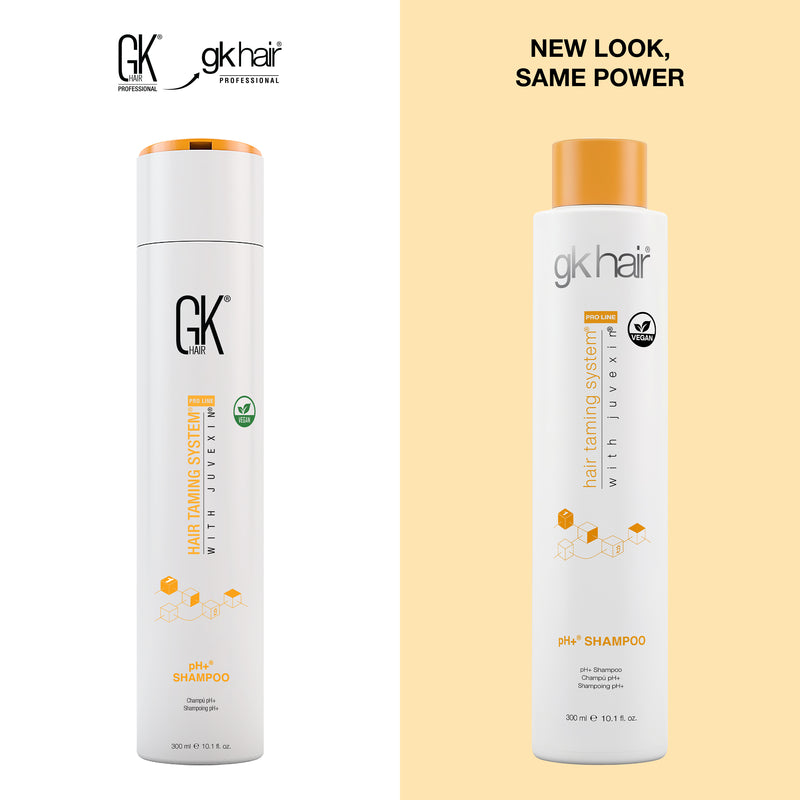
- Apply clarifying pH+ shampoo directly to the scalp, not the lengths. Massage into the scalp with fingertips for at least 60 seconds. Lengths should collect the lather as you rinse.
- When it comes to how to get rid of hairspray build up in hair, work the shampoo through the sprayed section for an extra 60 seconds, because the polymers are designed to hold.
- Rinse your hair for at least twice as long as you feel you should. Most people stop at 20 seconds. Double that at minimum.
- Repeat the shampoo step if hair still feels coated. The first shampoo removes surface oil and residue. That's why it doesn't lather much. This allows the second wash to get to your scalp and clear out anything lurking there.
- Condition from mid-lengths to ends only. Putting conditioner on your scalp re-applies residue right away after a clarifying shampoo.
How to Remove Product Build Up From Hair Naturally
Homemade remedies for product build-up work better as preventative maintenance in between clarifying washes rather than replacing them.
Apple Cider Vinegar for Hair Build Up
You'll want to combine the water and ACV, using the same amount of each, and then apply it to your hair after you shampoo, leaving it for two minutes before rinsing. It won't remove heavy deposits of silicone or minerals from your hair but will help prevent new buildup from occurring if used every two weeks.
What to Avoid
One common recommendation is using baking soda as a natural clarifying shampoo. Don't do it. Baking soda is way too alkaline. It raises the cuticle drastically and damages the hair shaft, particularly colour-treated or chemically-treated hair, removing the residue but washing out colour and moisture in the process.
Stylist's Corner: During salon consultations, we recommend always starting at the back of the head, at the nape and the crown. That is where people rinse the least, because it's difficult to reach beneath the shower head. If you notice a film or flatness in that spot, but the rest of your hair looks healthy, that's almost always product build up rather than a scalp condition. Two extra minutes of rinsing at the back will make all the difference.
Choosing the Best Shampoo for Product Build-Up
The best shampoo for product build-up depends on what type of build-up you're dealing with and how frequently you need to clarify. GK Hair's pH+ Shampoo gently clarifies and lifts away residue without stripping hair of its natural goodness.
It preps your hair for treatment without the drying effect of a high-pH wash. It contains Juvexin V2, our plant-based protein derived from quinoa and pea, which fortifies the hair fibre while the shampoo lifts residue away. It is best for anyone clarifying regularly or prepping hair for a smoothing treatment.

Sticky hair that feels tacky, not just waxy, is often caused by over-conditioning, too much product left on too long or applied too near the scalp. Wash it out with the clarifying shampoo, then use a lightweight conditioner only on the ends.
Build-Up After a Keratin Treatment
Hair feels sticky after keratin treatment between 24 and 72 hours following your appointment. This is completely normal and is not due to build up. The keratin is continuing to bond with your hair shaft during this time period and the hair will feel slightly sticky/heavy until the keratin has set completely.
Using the wrong aftercare is the culprit behind post-keratin build-up. Standard shampoos with sulphates are known to strip the keratin bond prematurely, and applying heavy conditioners and styling products before the bond is fully set will cause them to layer over it, stopping it from sealing.
Don't wash your hair until the settling window your stylist gives you is up, which can be as long as three days with traditional formulas. Afterwards, make sure to use a sulphate-free shampoo and conditioner and avoid heavy products on the lengths until the treatment has set. (Find the full routine in our keratin treatment aftercare guide.)
How to Prevent Build Up Coming Back
The key to stopping buildup, for the most part, is just about how frequently you cleanse and the products you choose. Breakdown of schedule by hair type:
- Fine or oily hair: once weekly
- Normal hair: every other week
- Curly, coarse or colour-treated hair: every 3 to 4 weeks
- Keratin-treated hair: only as needed or as directed by your stylist. Clarifying too often will actually dissolve the treatment.
Pro Tip: A better approach than waiting for buildup to show is to work a clarifying wash into your regular hair care routine. Always rinse longer than you think you need to. Do not apply conditioner to your scalp. If you wear extensions, wefts, or tape-ins, be sure to pay extra attention to the bonds. Build up likes to collect there and can break down the adhesive with time.
When to See a Professional
One or two proper clarifying washes should clear product build-up. See a stylist or your GP if the flaking continues, if your scalp is red, sore or itchy, if your hair feels sticky and stretchy when wet (that points to damage rather than residue), or if you notice sudden shedding alongside scalp sensitivity.
Frequently Asked Questions
How often should I clarify my hair?
It depends on your hair type. Fine or oily hair only needs a weekly clarifying wash. Normal hair can go about every other week, and curly, coarse or colour-treated hair every three to four weeks. Clarifying more frequently than needed will fade colour and strip your scalp of the oils it needs.
Can product build-up cause hair loss or thinning?
Build-up doesn't directly cause hair loss, but heavy build-up can clog follicles and create scalp conditions that become inflamed or irritated with time. The inflammation, not the actual product leftover, can lead to shedding if continued. One or two clarifying washes, along with adopting a healthy wash schedule, can typically fix the problem without doctors' involvement.
Does hard water in Australia make build-up worse?
Yes. If you live in a hard water area (where minerals in water are high), then mineral build up contributes to product build up rather than replacing it. Adelaide, Perth and most of regional QLD have harder water supplies. Sydney and Melbourne are softer. A chelating shampoo every three to four weeks is what lifts the mineral layer.