What keeps that freshly smooth, glossy finish looking good days after you've left the salon is your keratin treatment aftercare. The first few days matter the most, but what you do after your first wash and how you handle your hair in the weeks that follow also affect how long the results stay smooth and manageable.
Keratin treatment aftercare starts with 72 hours of keeping your hair dry, loose and free of clips and tucks while the treatment sets. After that, wash two to three times a week with a sulfate- and sodium chloride-free shampoo and other treatment-friendly products, keep hot tools at 200°C or below and use a heat protectant, and rinse out chlorine and salt water straight after swimming.
Keratin Treatment Aftercare: The 10 golden rules at a glance
Rule 1: Give your hair time to settle. Keep it dry, loose and unclipped for your formula's setting window: 72 hours for traditional keratin, none for our same-day-wash The Best. Learn more about how a keratin treatment works.
Rule 2: Keep the first wash gentle. Shampoo the scalp once in cool water and condition only the mid-lengths and ends.
Rule 3: Wash strategically. Aim for two to three washes a week rather than washing daily.
Rule 4: Choose treatment-friendly products. Skip shampoos with sulfates or sodium chloride (salt).
Rule 5: Use heat moderately. Keep irons at or below 200°C and apply a heat protectant first.
Rule 6: Use sun protection. UV rays dry hair out and dull the smooth finish.
Rule 7: Handle your hair gently, especially when it is wet, tangled or freshly treated.
Rule 8: Sleep with less friction. Sleep on silk or satin to reduce rubbing and creasing.
Rule 9: Deep-condition weekly. Give dry lengths extra moisture with a deep conditioner without coating the strands.
Rule 10: Rebook your appointment when it's time. Your treatment will gradually fade, so learn the signs rather than waiting for frizz to take over.
What aftercare actually does to your keratin results
A keratin treatment does the smoothing work in the salon, but you determine what happens afterwards and how long that smooth finish stays. For the first few days, the treatment is still settling into the hair. Hence, the way you wash, handle and style it matters more than you know.
After the treatment, your priority is to keep your hair dry and avoid anything that could leave a bend while the treatment settles. After that initial window, your routine switches to avoiding habits and products that wear it down fast.
Frequent washing, harsh cleansing ingredients, heat, chlorine, salt water and the environment can all affect treated hair over time. Your keratin treatment aftercare is knowing when your hair needs extra care and when you can get back to your normal routine.
Combing and detangling in the first three days
Can I comb my hair after keratin treatment? Yes, but keep it gentle. If your hair becomes tangled, use a wide-tooth comb and work carefully from the ends upwards rather than repeatedly brushing a section. Your keratin treatment aftercare within the first few days is simple: no product, keep your hair smooth without disturbing the silkiness.
Your first wash after a keratin treatment
If you're wondering how long after keratin treatment to wash hair, the procedure is to wait 72 hours after the treatment before your next wash. Now, the wait is over. Your keratin treatment after first wash can make your hair feel a little different from the salon finish, but that doesn't mean the keratin isn't there anymore. Your hair has just gone through its first wash, so it's normal for the ultra-sleek appearance to soften.
Our treatments are built on Juvexin V2, a non-hydrolysed, plant-based protein from quinoa and pea that enters the cortex and coats the cuticle, which is why salons in more than 75 countries use them.
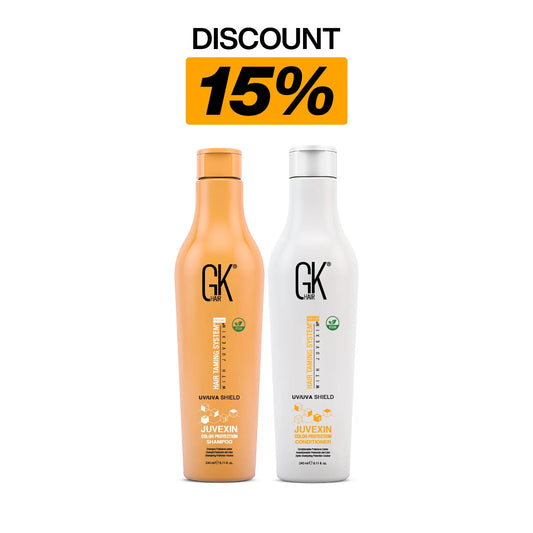
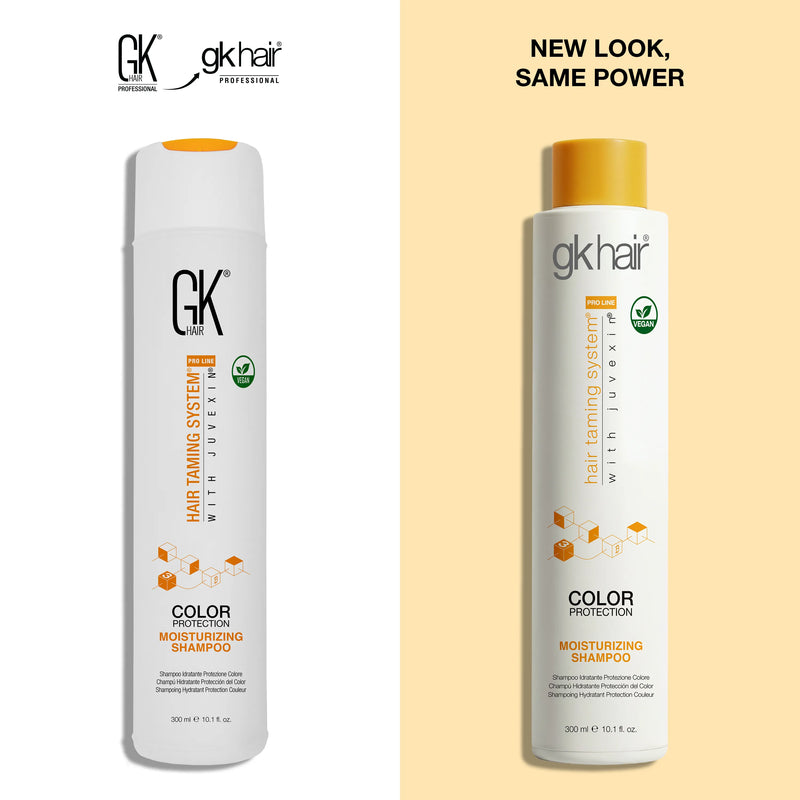
The best shampoo for keratin treated hair should cleanse the hair without making the lengths feel squeaky or stripped. GK Hair's Moisturizing Shampoo is a practical choice that fits this design.
Best for: regular post-treatment washing when you want gentle cleansing without leaving the lengths dry.
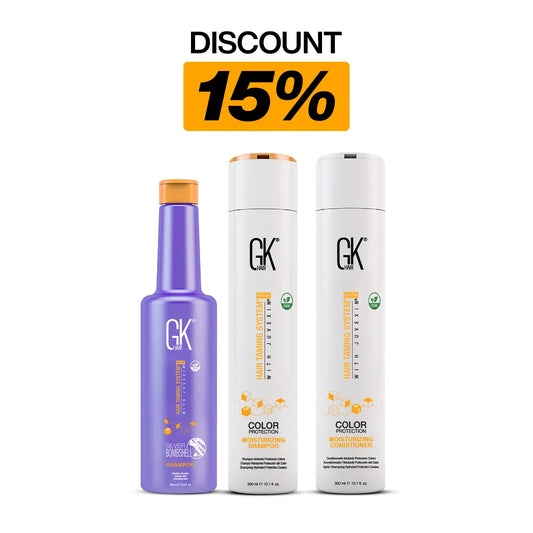
If you also use purple shampoo to manage unwanted brassy tones, check that the formula is suitable for treated hair before adding it to your routine. Here's what to know about using purple shampoo on keratin-treated hair.
What to expect and how your hair should feel
Once the 72-hour setting period is over, wash your hair gently with a suitable shampoo and follow with a conditioner through the mid-lengths and ends. Your hair may have a little movement, but that's completely normal and an indication that you're back to your normal routine and not that the treatment has disappeared.
Stylist's Corner: Your first wash shouldn't be hard. Wash with care and avoid scrubbing your lengths, shampoo the scalp, let the lather travel through the lengths as you rinse, then concentrate the conditioner on the lengths. GK Hair's stylist recommends washing once with cool water rather than warm water.
How often to wash keratin-treated hair
Once you've made it through the first wash, there is no need to shampoo your hair every day. We recommend washing your hair two to three times a week. Your scalp, hair texture, activity level and the Australian climate all affect how long it lasts.
Washing less frequently reduces exposure to water and shampoo and makes the treatment last. But if your roots become sweaty and oily before your next wash, a dry shampoo for keratin treated hair can help you stretch the gap between washes. Apply it mainly at the roots, allow it to absorb excess oil, then brush to work it through. Don't use dry shampoo every day, as too much builds up and makes the scalp heavy.
Choosing keratin treatment aftercare products
Good keratin treatment aftercare products should make your routine easier, not leave you wondering which bottle belongs where. After the first wash, focus on three things: gentle cleansing, enough moisture to keep the lengths supple, and protection against factors that may wear the treatment down.
1. Sulfate-free shampoo for keratin-treated hair
Look for a sulfate free shampoo for keratin treated hair that cleanses the scalp without being aggressive on scalp oils. Sulfates are not the only ingredient to be wary of. Sodium chloride (salt) can also shorten the life of the treatment, so always check the ingredients list before making a purchase.
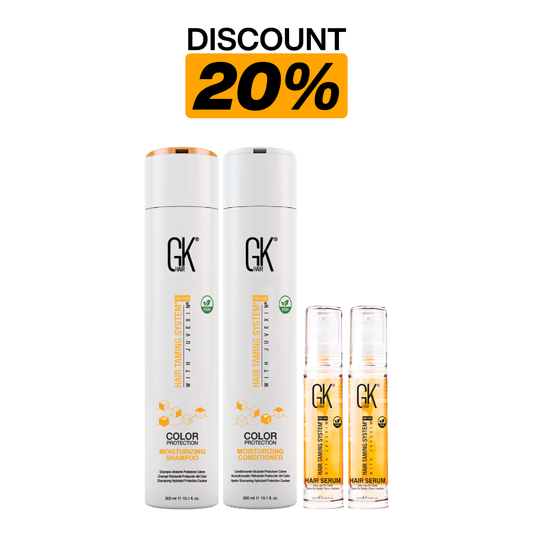
GK Hair sulfate-free shampoo and conditioner are designed for an everyday routine that keeps your hair manageable. However, if you're considering a new keratin service rather than maintaining the existing one, then you should check out our The Best Hair Treatment to understand where the treatment itself fits into the picture.

2. The right conditioner
Shampoo isn't the only product that protects keratin-treated hair. Another important product on your shelf for a complete keratin treatment aftercare is your conditioner. A good conditioner can add softness that washing might have taken away and our Moisturizing Conditioner fits naturally into the same routine as the shampoo. Apply your conditioner from the mid-lengths to the ends, where your hair is most likely to feel dry, rather than coating the scalp.
Best for: maintaining softness, manageability and moisture after regular washing.
The best conditioner for keratin treated hair is not necessarily the one that's rich in ingredients. Heavy or rich conditioners can leave fine and oily hair flat and greasy. Choose one that supplies enough moisture to keep the lengths smooth without weighing it down.

3. Your weekly hair mask
If your lengths are dry, a weekly hair mask for keratin treated hair can provide more concentrated conditioning than your regular conditioner. Use a mask from the mid-lengths to ends and leave it on according to the product directions, then rinse thoroughly. Keep it away from the scalp unless the product specifically says otherwise.
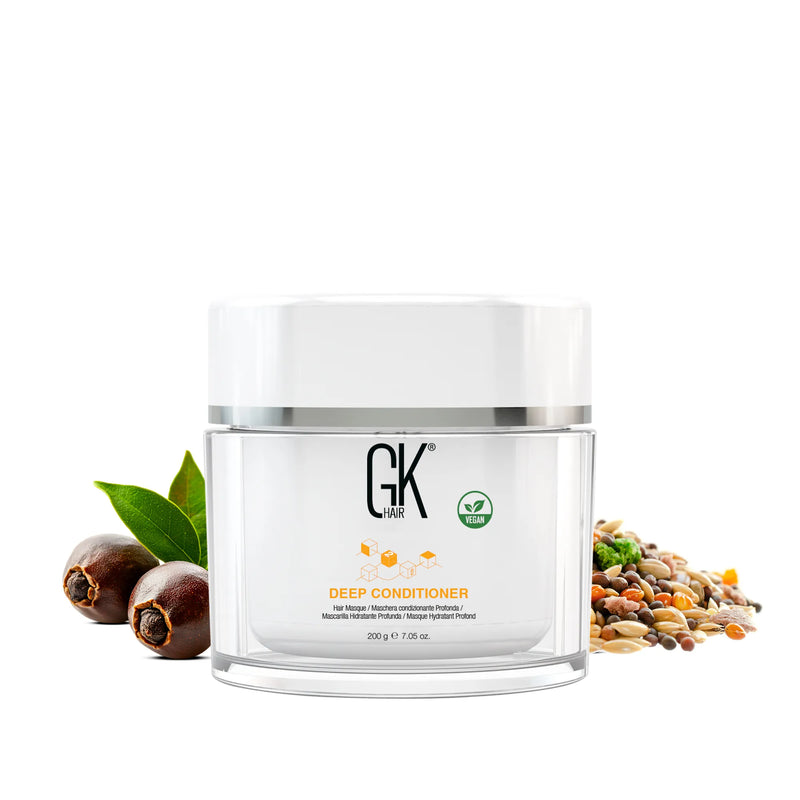
For an easy once-a-week addition, use our weekly Deep Conditioning Mask after shampooing.
Best for: dry, damaged and treated hair that needs a deeper conditioning step.
Heat-styling keratin treated hair
Keratin-treated hair is already smoother, so you may not need as much heat to get the finish that you want. That is good news for your hair because high heat can cause dryness and damage, even when the treatment has made styling easier. Keep irons and dryers at or below 200°C (390°F) when heat styling treated hair. Start lower where possible and increase if needs be.
Why a heat protectant still matters
While a finishing serum can make the hair look smoother after styling, it doesn't replace a heat protectant. Serums and heat protectants do different jobs. Serum can help improve the feel of your hair, but a heat protectant acts to shield the fibre from thermal stress. If heat-styling is a regular part of your routine, apply our ThermalStyleHer Hair Cream first before using your dryer, straightener or curler.
Best for: protection from high temperatures and heat damage, adds shine and lustre.
Curly hair after a keratin treatment
If you have naturally curly or coily hair, a keratin treatment will smooth the hair and may change the shape of your curls, but how much it changes depends on your hair and the treatment you use.
Your curly hair after keratin treatment may not remain springy like it was. As the treatment gradually wears down, more of your natural curl texture and pattern may begin to show through, particularly around the roots and new growth. Use lightweight styling products and scrunch gently rather than repeatedly brushing through the hair.
Keeping keratin smooth in Australian humidity
Australian weather, especially humid air, can make the hair absorb moisture, and sun and salt can make the hair dry too. Your keratin treatment aftercare should not end in the bathroom. Keep your hair protected from humidity and use a smoothing product to control frizz and flyaways. You should also use a hat to reduce direct sun exposure on your hair if you'll be outdoors for several hours.
Swimming, chlorine and salt water
Can you swim after keratin treatment? Yes, but timing matters. Avoid swimming during the first 72 hours because getting the hair wet may undo the finish. Once that is over, you can swim but chlorine and salt water can slowly wear the treatment down. You can reduce that by first wetting the hair with fresh water. Hair that's saturated with water absorbs less chlorinated water. After swimming, rinse your hair thoroughly with water so that chlorine doesn't dry off on the strands.
Sun and UV protection
Extended UV exposure can contribute to dryness and leave the hair looking less smooth, especially when you heat-style and spend time outdoors. Use a scarf when you're outside and use products formulated with UV protection if outdoor exposure is a regular thing.
When Things Go Wrong: Sticky, Frizzy or Flat Hair
Even with a good routine, treated hair won't always behave exactly as expected. Often the cause is using too much product, the wrong product, or the way the treatment was done.
1. Hair feels sticky or greasy
If your hair feels sticky after keratin treatment, first check what's sitting on your hair instead of adding another product. Heavy conditioners, leave-in creams and oils can build up around the scalp. Wash off grease and build-up with a sulfate-free balancing shampoo for oily roots.
2. Hair is still frizzy
Hair still frizzy after keratin treatment? Check the basics first: was it washed, tied or wet before 72 hours, and is your shampoo sulfate- and sodium chloride-free? A little movement after the first wash is normal. If frizz still appears across the whole head within two weeks, ask your stylist to review the application and processing time before adding more products.
3. Hair looks flat with no movement
Flat or limp hair simply needs less product. If you apply conditioner too close to the scalp, use serum in excess or use a hair mask frequently, your hair can become heavy and flatten the natural movement of the hair. Start by reducing the amount of finishing products you use and keep them on the lengths rather than the scalp.
How long your treatment lasts and when to rebook
A keratin treatment doesn't switch off because of one wrong routine. Well, the smoothness softens as you wash it, expose it to the environment and new hair grows from the scalp. Most keratin treatments last three to five months. Our The Best treatment is formulated to keep hair smoother for up to five months; how close you get depends on how often you wash, how much heat you use and how much time you spend in pools and the sea.
1. What to expect at two weeks
Around the two-week mark, your hair should still be smooth. You may notice natural movement now, but the sleekness should still be there. Just settle into your normal shampooing and conditioning routine.
2. What to expect at six weeks
At six weeks, the treatment may begin to fade out. New growth would have made your natural texture more noticeable too. If after all this, your hair still feels manageable, there is no need to rush into another treatment. But if you're planning another salon service like a colouring treatment, then our guide on colouring hair after a keratin treatment is a must-read.
3. What happens after three months?
Your keratin treatment after three months is when many people notice more regrowth and softer smoothness, which is usually the time to talk to your stylist for a touch-up.
Keratin treatments are temporary smoothing services and their results gradually fade out. If maintenance alone doesn't curb frizz any longer, then you should start discussing a rebook with your stylist. From time to time, compare your progress with your original result. Our keratin treatment before and after guide can also help you understand why and how the treatment fades.
The bottom line on keratin aftercare
As the weeks pass, your routine can stay simple with the right shampoo, conditioner and hair mask doing most of the work.
Keep your routine to a sulfate-free shampoo, a moisturising conditioner and a weekly mask, and your results will hold. When frizz returns through the mid-lengths, book a touch-up with your stylist.
Frequently Asked Questions
1. How long after a keratin treatment can I wash my hair?
Wait at least 72 hours before washing your hair, unless your stylist gives you a different instruction. Those hours give the treatment enough time to settle in. When you wash, use gentle, sulfate-free products and minimise wash frequency.
2. What should I avoid after a keratin treatment?
During the first 72 hours, avoid washing or deliberately wetting your hair, tight ponytails, use of clips and headbands, excessive heat and harsh cleansing products. Chlorine and salt water can gradually reduce the life of the treatment.
3. Can I tie my hair up after a keratin treatment?
Not during the 72-hour wait period. Keeping your hair loose is better as putting your hair up can leave creases and dents on freshly treated hair.
4. How long does a keratin treatment last?
Most keratin treatments last three to five months. Our The Best treatment keeps hair smoother for up to five months when you wash two to three times a week with a sulfate-free shampoo, keep heat at or below 200°C and rinse with fresh water after swimming. Book a touch-up when frizz returns through the mid-lengths.
5. How to sleep after keratin treatment?
Yes, even your sleep pattern can ruin your treatment. The easiest approach is to sleep with your hair loose and straight rather than putting it into a bun, ponytail or braid. You can also use a silk or satin pillowcase to reduce friction, tangling and roughness.
6. What to avoid after keratin treatment?
- Washing or wetting the hair during the wait window
- Using tight buns or putting your hair in braids and ponytails
- Clips, headbands and anything that can create friction or press firmly on to the hair
- Excessive brushing and pulling through knots
- Unnecessary exposure to rain, swimming pools or seawater
7. Can you curl keratin-treated hair?
Yes. You can curl keratin-treated hair once the initial setting period has passed. To achieve it, use a moderate temperature, work in small sections and don't pass the iron on the same strand repeatedly. For a softer result, use heatless methods such as loose rollers to create movement without heat.