A mild, low-processing hair colour for curly hair will perform best between two shades of your natural base colour. Curly hair tends to have higher porosity, so the curls absorb colour faster than straight hair would. Your curl pattern will open up temporarily when colouring your hair, but should return to normal after one or two washes with the right prep and aftercare.
Because curly hair twists differently from straight hair, it takes colour differently. When done right, using curly hair dye can look vibrant and long-lasting instead of damaging.
Why Curly Hair Reacts Differently to Colour
At salons in over 75 countries, GK Hair colourists are asked this question: Why does the same dye process so differently on curly hair? The solution lies in the shape of the hair strand, not the dye.
Porosity, Cuticle Structure and Why Curly Ends Dry Out Faster
Each strand of hair has a cuticle made up of scales. Those scales overlap each other and lie completely flat against each other when your hair is straight. Curling your hair kinks back and forth several times.
Each time the hair kinks, those scales lift up ever so slightly, so your cuticle is sitting in an open position even before colourants are involved. That, WebMD's hair porosity guide explains, is porosity: your hair's ability to absorb and lose moisture.

Hair texture plays a role, too. Straight hair lets oils travel downward; curls act as barriers that slow the oil down, so the ends stay drier than the roots. A drier, more porous strand also absorbs colour faster than box timings assume.
Does Dye Damage Curly Hair?
Some damage is unavoidable: any dye that opens the cuticle costs curls a little moisture and elasticity. Done gently, that loss is minor, and your curls may look looser for a wash or two until deep conditioning restores their spring. Repeated bleaching is different. It can stretch the protein structure inside each coil so far that the curl pattern relaxes for good.
Choosing the Right Hair Colour for Curly Hair
Best Hair Colour for Curly Hair by Base Shade and Undertone
Start with two shades of your natural base colour that complement your skin's undertone (not just your hair colour). Golden or peachy complexions have warm undertones and look great in copper, auburn, caramel, and honey blonde.
Pink or rosy complexions have cool undertones and are a perfect match for ash brown, espresso, and cool beige blonde. Neutral undertones can go either warm or cool, so it's up to you how light or dark you want to go. Try to stay within that two-shade window. Anything further should be left to a professional colourist.
Hair Colour for Dark Curly Hair and How Much Lift You Need
Dark curly hair needs more lift to get to your desired lightness levels. Lift is where textured hair over-processes the fastest. Lightening a level 3 or 4 base to caramel or bronde levels will most likely need bleach or high-volume developer, which extracts moisture that curly hair can not lose.
Book a pre-lightening consultation for a dramatic transformation instead of trying to force a box dye past its intended lift.
Curly Hair Colour Ideas for Short, Mid-Length and Long Curls
Short ringlets allow each curl to show its colour independently. One colour will appear bold and defined. The longer the curls are, the more colours will blend into one another. Curl length affects how colours appear. For curly bangs or short curls, use one deep colour or a soft root shadow.
Short curly hair colour ideas include warm cinnamon and dark chocolate colours because curls hold a solid colour stunningly. Mid-length curls do well with two to three embedded tones, and long curls are great for a blended balayage from dark to light.
Which Type of Dye to Use on Curls
Semi Permanent Hair Dye for Curly Hair versus Permanent
Because semi-permanent dye doesn't force open the cuticle but rather sits on top of it, it's one of the least-damaging options for textured strands that still offers real colour payoff.
Permanent hair colour penetrates through the cuticle and into the cortex, meaning it typically requires ammonia or another higher-volume developer to achieve this level of penetration. It lasts longer, but it also asks a lot more of your curl pattern. Demi-permanent is the happy medium: it opens the cuticle enough to penetrate, but doesn't require ammonia.
| Dye Type | Effect on the Cuticle | Best for Curls When... |
| Temporary | Coats the shaft only | Testing a colour; 1-2 washes |
| Semi-permanent | Sits on the surface | Curls are fragile or coloured; 4-6 washes |
| Demi-permanent | Opens the cuticle slightly | You want richer colour or grey coverage; 20-24 washes |
| Permanent | Fully lifts the cuticle | You need real lift or lasting colour; grows out rather than washes out |
Single process colour lifts and deposits colour simultaneously. Double process refers to lightening then toning, often during the same visit, as most deposit-only toners are mild enough to neutralise the brass immediately following bleaching. If you are planning on having permanent colour added on top of bleached curls, you should wait approximately 2 weeks to tint your hair, allowing time for recovery.
Curly Girl Approved Hair Dye and What to Avoid on the Label
Curly Girl approved isn't a label on dye boxes. It's a set of ingredient rules (no sulphates, non-water-soluble silicones or drying alcohols) that matters most for what you use after colouring. Check labels and skip:
- High-ammonia dyes, which strip moisture curls can't spare
- Sulphates in your post-colour shampoo
- Non-water-soluble silicones in conditioners and stylers
- Drying alcohols near the top of the ingredient list
- Undisclosed “fragrance” blends if your scalp is sensitive
GK Hair Colour Options for Curls
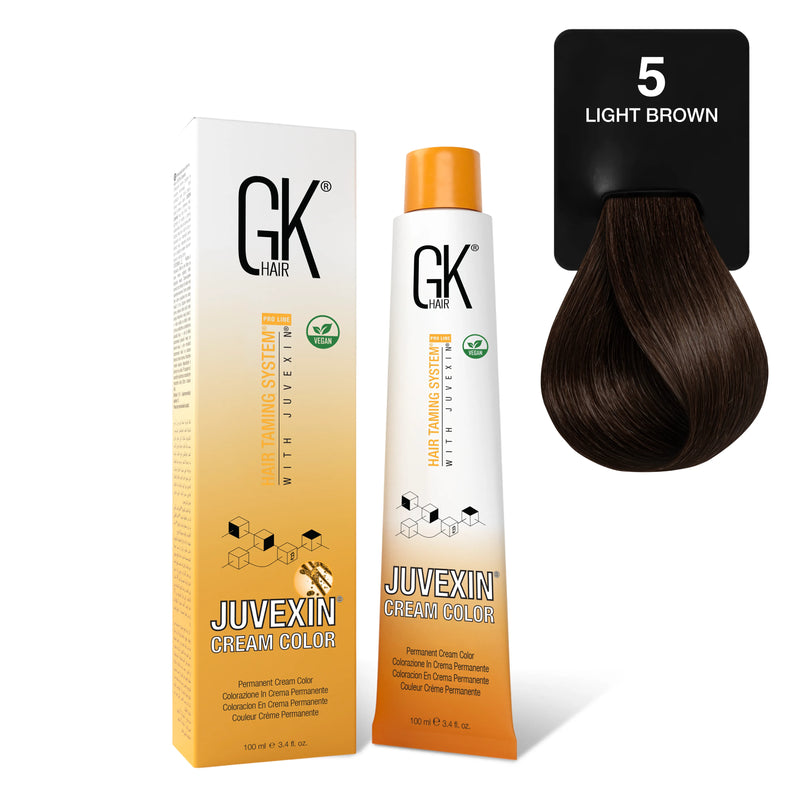
As a new base colour, consider Juvexin Cream Colour Naturals. Formulated with Juvexin V2 (our plant-based protein from quinoa and pea) to strengthen hair and ceramides to reduce porosity, levels 1-6 contain about 1.5% ammonia.
Applied from the same tube, they can be permanent or demi-permanent depending on which developer you use: 8 or 10 volumes simply deposit colour, making them the gentlest option for weak curls. For dense grey coverage, select the Intense Naturals range.
For pre-lightened curls that simply need a little refreshing, our GK Hair Colour Masque range (Red Red Bombshell, Lavender Bombshell and Ultra Blonde Bombshell) deposits tone with no lift for 8 to 10 washes, building up colour or neutralising brass between colour services.
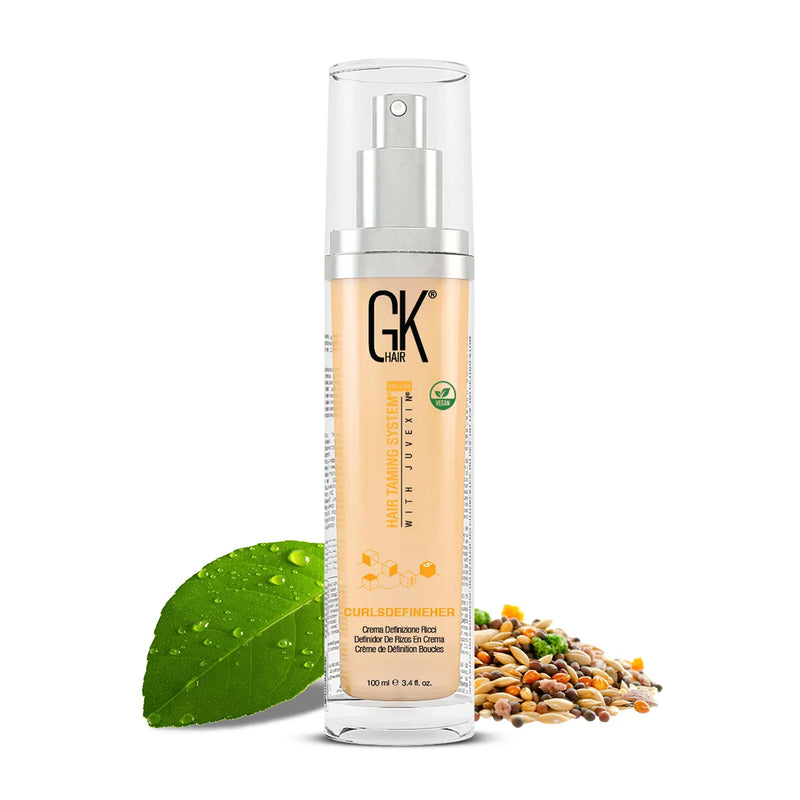
Definition still matters after colouring your hair. Our curl definition product, CurlsDefineHer was formulated with natural seed oils and Juvexin to define curls and cut through frizz on freshly coloured curls without weighing them down. Ingredient lists for each product can be found on their individual product pages. Check them out if you have a sensitive scalp that reacts to certain ingredients.
When Should You Book a Colourist Instead of Colouring Curls at Home?
Book professional hairdressers for dye jobs that are multiple shades away from your natural colour, actually lightening dark curls, or colour corrections, as there is more potential for hair damage if the developer is too high or left on for too long.
Colourists can also more accurately section and process curls than most people can at home. If you're just maintaining your colour or touching up a few greys, though, your at-home prep should be sufficient.
How to Dye Curly Hair at Home
Timing is everything, as much as application technique: preparation during the two weeks leading up to colour day matters just as much as it does on the day itself.
Preparing Curls in the Two Weeks Before You Colour
Deep condition weekly for the two weeks leading up to colour day. Hydrated curls will be much less damaged throughout the process. Don't wash 24-48 hours before colour day either, let your natural oils help protect your scalp.
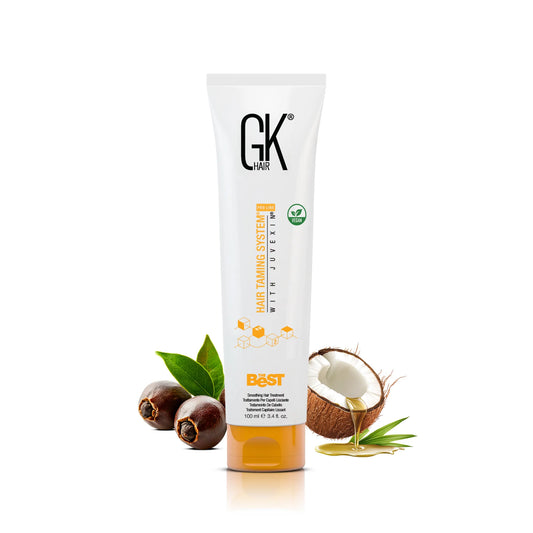
Thinking about getting your keratin done around your colour too? The Best Treatment can be applied on the same day as colour. However, we would advise depositing only colour using a 10-volume developer or lower straight after the treatment.
If you want something more dramatic, like a full lift or lightening service, then we recommend leaving it at least two weeks for curls to recover. The timeframe may vary if keratin is done before or after colour, so it's always good to ask before booking both treatments.
Do a patch test 48 hours in advance every single time, not just initially. Healthline's guide to hair dye allergies notes that you can become sensitive to ingredients in common hair dyes even if you've safely coloured your hair in the past. Also, do a strand test on a discreet area so you can test the tone.
Sectioning, Application and Processing on Textured Hair
Achieving an even colour on curls is all about working with sections, not against them:
- Section dry, detangled curls into 4-6 sections, one section at a time.
- Stretch the section out slightly as you apply, because dye beads off of tightly coiled curls without penetrating.
- On previously coloured curls, apply to the regrowth first and pull colour through the lengths for the last 5 to 10 minutes, since porous ends grab pigment fastest. On virgin curls going lighter, start at the mid-lengths and ends and finish at the roots, since scalp heat makes roots process quicker.
- Apply a thick balm to your hairline so you can wipe stray dye off your skin rather than having it stain.
- Set a timer for your colour's processing time (30 minutes for Juvexin Cream Color, mixed 1:1.5 with developer), but check a strand 5 to 10 minutes early, since porous curls often reach the shade sooner.
- Once dye is applied, comb through with a wide-tooth comb for even saturation.
- Rinse hair with cool water when processing is complete.
Stylist's Corner
GK Hair colour is applied to dry, stretched curls, never on wet curls. Our colour technicians section hair with a rat-tail comb to ensure each curl remains saturated before bouncing back. Adding water dilutes the colour and causes curls to bounce back prematurely, resulting in uneven colour application.
Curly Hair Highlights, Foils and Balayage on Curls
Highlights on curls follow contour instead of lying flat, so technique is everything. Foils are still possible, but your sections must be smaller and drier than on straight hair. Wide-spaced foils show as stripes once curls clump together, so finer sections blend better. Balayage is usually more forgiving because free-handed placement is done following your growth pattern.
Caring for Dyed Curly Hair Afterwards
The First 72 Hours After Colouring
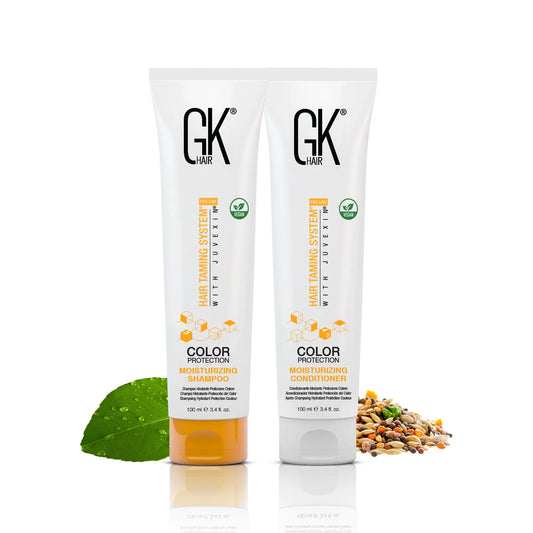
Wait 48-72 hours before washing. The cuticle needs this time to close fully and lock the new colour in. When you are ready to shampoo, use GK Hair Shield Shampoo and Conditioner.
They are sulphate-free and contain UV/UVA protection specifically designed to work with our colour collections. Colour fades fast in the Aussie sun, so treat curls to Lock Me Color Masque to seal in colour and protect hair from UV/UVA rays.
Keeping Colour Vibrant and Curls Hydrated Long Term
Curly hair only needs to be washed once or twice a week. Do not wash daily, as this will remove moisture and colour from hair. Try balancing protein and moisturising treatments throughout the month. Too much protein leaves curls stiff and brittle. Too much moisturising will leave your curls limp.
Doing a bond treatment every other week will help replace what colour services take away. By including it in your regular curly hair routine, you can help your hair keep its strength between colourings. Finish off with a curl-defining cream to lock down those clumps into curls.
Colour That Curls Can Actually Keep
The right hair colour for curly hair is a gentle, low-ammonia formula applied to dry, stretched curls and followed by sulphate-free, UV-protective aftercare. Prep well, stay within two shades at home, and leave big lifts to a colourist. Find your shade in our Colours & Masque collection.
FAQs
Can you dye curly hair without losing the curl pattern?
Yes, most curls will keep their curl pattern when colouring if you use a gentle formula and limit processing time. You may experience some temporary loosening right after processing, but it will go back to normal after one or two washes once the conditioner returns moisture to the strand.
How long should you wait between bleaching and dyeing curly hair?
Allow at least two weeks between bleach and colour on top, and give your curls time to build strength back up. Skipping that break is one fast way to get gummy, overstretched curls that snap instead of bounce.
Should you wash curly hair before colouring it?
No, don't wash for 24 to 48 hours before colouring. Natural oils build up on your scalp and form a barrier against the chemicals in the dye.
What hair dye is best for curly hair?
Use a low-ammonia, conditioning formula when choosing demi-permanent or deposit-only colour, as it is safest for most curls. It will add tone, but won't lift too much. Juvexin Cream Colour Naturals works both ways: mix with 8 or 10 volumes for deposit-only colour, or with a higher-volume developer for permanent results.
How often can you colour curly hair?
Colour or bleach services should be performed no more frequently than every 8-12 weeks. This gives your curls a chance to regain some strength between services. Root touch-ups and toning can be done more frequently since colour only applies to new growth or deposits tone without lift.